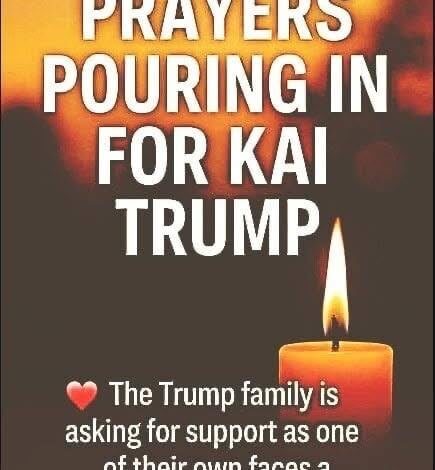
The digital landscape was recently flooded with messages of support and concern as news emerged regarding a health crisis within one of America’s most prominent political dynasties. Kai Trump, the eldest daughter of Donald Trump Jr. and Vanessa Trump, is currently in the process of recovery following a sudden and frightening medical emergency that required immediate surgical intervention. For a family whose lives are almost exclusively documented through the polarized lens of national politics and high-profile media appearances, this deeply personal event has offered a rare glimpse into their private vulnerabilities, reminding the public that no amount of fame or influence can shield a family from the universal anxieties of a medical crisis involving a child.
The emergency unfolded on a Monday evening in February 2026, when eighteen-year-old Kai began experiencing acute physical distress. According to several sources close to the family, what was initially thought to be a minor ailment quickly escalated into a life-threatening situation. Kai was rushed to a nearby medical facility where doctors diagnosed her with a ruptured appendix—a condition that, if not treated with extreme haste, can lead to severe systemic infection and life-altering complications. The medical team acted with necessary urgency, preping the teenager for an emergency appendectomy that was performed in the dark, silent hours of the night.
The operation was reported as a success, and as Kai began the arduous journey of post-operative recovery, the family transitioned from a state of frantic worry to one of guarded relief. Vanessa Trump, Kai’s mother, took to social media to break the family’s silence, sharing an emotional update that quickly went viral. In a moment that highlighted the raw, unedited nature of parental stress, Vanessa’s initial post contained a minor typographical error, referring to Kai as her “son” before quickly clarifying that she meant her daughter. This small slip served as a poignant indicator of the exhaustion and emotional toll the previous twenty-four hours had taken on the mother of five.
“I want to thank the incredible doctors and nurses who took such great care of my daughter,” Vanessa wrote, expressing a profound sense of gratitude that resonates with any parent who has ever had to trust the lives of their children to the hands of strangers in a hospital gown. She reassured the public that Kai is a “strong” individual and was “doing great” in the aftermath of the procedure. The post was not just a medical update; it was an invitation into the family’s inner circle during a moment of profound relief.
The update was accompanied by a series of intimate photographs that stood in stark contrast to the typical polished imagery associated with the Trump name. One image depicted Kai resting in her hospital bed, a faint, weary smile playing on her lips as she was surrounded by the blinking monitors and sterile equipment of the recovery ward. Another particularly moving photograph showed Donald Trump Jr. seated at his daughter’s bedside, his hand firmly clasping hers. This image of paternal devotion provided a humanizing counterpoint to his usually combative public persona, showcasing a father focused solely on the well-being of his firstborn child.
The reaction from the public was immediate and overwhelming. Regardless of political affiliation, thousands of people from across the country—and indeed the world—poured into the comments sections of social media platforms to offer prayers, well-wishes, and stories of their own experiences with similar medical emergencies. This outpouring of compassion highlighted a rare moment of communal empathy, where the shared human experience of illness and recovery bridged the ideological divides that often define the discourse surrounding the Trump family.